Tacori Supply Chain Policy
SOURCING AND SUPPLY CHAIN
Effective: April 16, 2021 (last revision date; December 15, 2025)
Overview
Tacori Enterprises is a wholesaler of fine jewelry. This policy confirms Tacori’s commitment to respect human rights, avoid contributing to the finance of conflict, and comply with all relevant UN sanctions, resolutions, and laws.
Tacori is committed to participating in business activities in an ethical and professional manner. We are focused on promoting stable, sustainable, long-term relationships with our suppliers and business partners.
We recognize that there are indirect impacts generated by our activities, in particular through our supply chain. We will seek to use our influence with those with whom we do business directly, in particular our suppliers, to promote the achievement of our social, ethical and environmental principles.
To do so, it is necessary that our suppliers, and in turn their suppliers, understand Tacori’s standards as set out in this Supply Chain Policy.We encourage suppliers to ensure that these expectations are communicated throughout their supply chain.
Tacori is a certified member of the Responsible Jewellery Council (RJC). As such, we commit to proving, through independent third-party verification, that we:
- Respect human rights according to the Universal Declaration of Human Rights and International Labour Organization Fundamental Rights at Work.
- Do not engage in or tolerate bribery, corruption, money laundering or finance of terrorism.
- Support transparency of government payments and rights-compatible security forces in the extractives industry.
- Do not provide direct or indirect support to illegal armed groups; and
- Enable stakeholders to voice concerns about the jewelry supply chain.
We utilize the OECD 5-Step framework as a management process for risk based due diligence for responsible supply chains of minerals from conflict-affected and high-risk areas.
Scope
This policy applies to all suppliers, manufacturers, and subcontractors involved in the sourcing, processing, or manufacturing of the gold, platinum, silver, diamonds, and colored gemstones contained in Tacori products, including both natural and laboratory-grown diamonds. This includes the manufacturers that produce Tacori’s finished jewelry and the diamond suppliers from whom Tacori purchases natural and laboratory-grown diamonds supplied to those manufacturers. Suppliers are expected to apply the requirements of this policy to their own operations and to communicate them to their upstream suppliers.
Ethics & Integrity
Tacori expects that its suppliers will conduct business with integrity and communicate honestly regarding the nature of the products they supply, disclosing accurately their weight, color and clarity, treatments of gemstones, the standard of fineness and trademarks of articles of precious metals and other matters as required by applicable federal, state, and local laws and regulations.
In coordination with the OECD Due Diligence Guidance for Responsible Supply Chains Annex II, we communicate our commitment to the following:
Regarding serious abuses associated with the extraction, transport, or trade of minerals;
We will neither tolerate nor profit from, contribute to, assist, or facilitate the commission of:
- Any forms of torture, cruel, inhuman, and degrading treatment.
- Any forms of labor, which means work or service which is exacted from any person under the menace of penalty, and for which said person has not offered himself voluntarily;
- Forced or compulsory labor.
- The worst forms of child labor.
- Human rights violations and abuses, or;
- War crimes, violations of international humanitarian law, crimes against humanity or genocide.
Regarding risk management of serious abuses;
- We will immediately investigate upstream suppliers if we find a reasonable risk that they are committing abuses described or linked to, any party committing these abuses, and will immediately suspend or discontinue engagement with upstream suppliers where we identify a reasonable risk that they are sourcing from, or linked to, any party committing serious abuses.
Regarding direct or indirect support to non-state armed groups;
We will not tolerate any direct or indirect support to non-state armed groups through the extraction, transport, trade, handling, or export of minerals. “Direct or indirect support” to non-state armed groups through the extraction, transport, trade, handling, or export of minerals includes, but is not limited to, procuring minerals from, making payments to or otherwise providing logistical assistance or equipment to, non-state armed groups or their affiliates who:
- illegally control mine sites or otherwise control transportation routes, points where minerals are traded and upstream actors in the supply chain; and/or
- illegally tax or extort money or minerals at points of access to mine sites, along transportation routes or at points where minerals are traded; and/or
- illegally tax or extort intermediaries, export companies or international traders.
References & Additional Comments:
- See ILO Convention No. 182 on the Worst Forms of Child Labor (1999).To identify non-state armed groups, companies should refer to relevant UN Security Council resolutions.
- “Affiliates” includes négociants, consolidators, intermediaries, and others in the supply chain that work directly with armed groups to facilitate the extraction, trade or handling of minerals.
- “Control” of mines, transportation routes, points where minerals are traded and upstream actors in the supply chain means i) overseeing extraction, including by granting access to mine sites and/or coordinating downstream sales to intermediaries, export companies or international traders; ii) making recourse to any forms of forced or compulsory labor to mine, transport, trade or sell minerals; or iii) acting as a director or officer of, or holding beneficial or other ownership interests in, upstream companies or mines.
- “Extort” from mines, transportation routes, points where minerals are traded or upstream companies means the demanding, under the threat of violence or any other penalty, and for which the person has not voluntarily offered, sums of money or minerals, often in return for granting access to exploit the mine.
Regarding risk management of direct or indirect support to non-state armed groups;
- We will immediately suspend or discontinue engagement with upstream suppliers where we identify a reasonable risk that they are sourcing from, or linked to, any party providing direct or indirect support to non-state armed groups as defined above.
Regarding public or private security forces:
- We agree to eliminate, direct or indirect support to public or private security forces who illegally control mine sites, transportation routes and upstream actors in the supply chain; illegally tax or extort money or minerals at point of access to mine sites, along transportation routes or at points where minerals are traded; or illegally tax or extort intermediaries, export companies or international traders.
- We recognize that the role of public or private security forces at the mine sites and/or surrounding areas and/or along transportation routes should be solely to maintain the rule of law, including safeguarding human rights, providing security to mine workers, equipment and facilities, and protecting the mine site or transportation routes from interference with legitimate extraction and trade.
- Where we or any company in our supply chain contract public or private security forces, we commit to or we will require that such security forces will be engaged in accordance with the Voluntary Principles on Security and Human Rights.
- In particular, we will support or take steps, to adopt screening policies to ensure that individuals or units of security forces that are known to have been responsible for gross human rights abuses will not be hired.
- We will support efforts, or take steps, to engage with central or local authorities, international organizations and civil society organizations to contribute to workable solutions on how transparency, proportionality and accountability in payments made to public security forces for the provision of security could be improved.
- We will support efforts, or take steps, to engage with local authorities, international organizations and civil society organizations to avoid or minimize the exposure of vulnerable groups, in particular, artisanal miners.
- Direct or indirect support” does not refer to legally required forms of support, including legal taxes, fees, and/or royalties that companies pay to the government of a country in which they operate (see paragraph 13 below on disclosure of such payments). where minerals in the supply chain are extracted through artisanal or small-scale mining, to adverse impacts associated with the presence of security forces, public or private, on mine sites.
Regarding risk management of public or private security forces;
- In accordance with the specific position of the company in the supply chain, we will immediately devise, adopt and implement a risk management plan with upstream suppliers and other stakeholders to prevent or mitigate the risk of direct or indirect support to public or private security forces, as identified in paragraph 5, where we identify that such a reasonable risk exists. In such cases, we will suspend or discontinue engagement with upstream suppliers after failed attempts at mitigation within six months from the adoption of the risk management plan.
- Where we identify a reasonable risk of activities inconsistent with above, we will respond in the same vein.
Regarding bribery and fraudulent misrepresentation of the origin of mineral;
- We will not offer, promise, give or demand any bribes, and will resist the solicitation of bribes to conceal or disguise the origin of minerals, to misrepresent taxes, fees and royalties paid to governments for the purposes of mineral extraction, trade, handling, transport and export.
Regarding money laundering;
- We will support efforts, or take steps, to contribute to the effective elimination of money laundering where we identify a reasonable risk of money-laundering resulting from, or connected to, the extraction, trade, handling, transport or export of minerals derived from the illegal taxation or extortion of minerals at points of access to mine sites, along transportation routes or at points where minerals are traded by upstream suppliers.
Regarding the payment of taxes, fees, and royalties due to governments:
- We will ensure that all taxes, fees, and royalties related to mineral extraction, trade and export from conflict-affected and high-risk areas are paid to governments and, in accordance with the company’s position in the supply chain, we commit to disclose such payments in accordance with the principles set forth under the Extractive Industry Transparency Initiative (EITI).
Regarding risk management of bribery and fraudulent misrepresentation of the origin of minerals, money-laundering and payment of taxes, fees, and royalties to governments;
- In accordance with the specific position of the company in the supply chain, we commit to engage with suppliers, central or local governmental authorities, international organizations, civil society and affected third parties, as appropriate, to improve and track performance with a view to preventing or mitigating risks of adverse impacts through measurable steps taken in reasonable timescales. We will suspend or discontinue our engagement with upstream suppliers after failed attempts at mitigation.
Legal Compliance
Tacori expects all its suppliers to comply with their national laws and regulations and to respect the fundamental International Labour Organization (ILO) conventions and the Universal Declaration of Human Rights. Where the Code or national law addresses the same issue (OSHA) the supplier is expected, as a minimum, to follow the applicable legal requirements of the country in which it operates.
Likewise, Tacori expects that its suppliers will comply with the requirements of the US Foreign Corrupt Practices Act and the UK Bribery Act in all its dealings, no matter where in the world. Such compliance includes prohibiting employees, officers, directors, agents, representatives, affiliates and their families from requesting, accepting, paying or offering any form of “under-the table” payment, “kickback,” bribe, rebate, or other improper payment or gratuity, whether directly or through a third party regardless of form, whether in money, property, or services (i) to obtain favorable treatment in securing business, (ii) to pay for favorable treatment for business secured, (iii) to obtain special concessions or for special concessions already obtained, for or in respect of either party or any affiliate of either party, or (iv) in violation of any legal requirement.
We will not offer, promise, give or demand bribes, and will resist the solicitation of bribes, to conceal or disguise the origin of diamonds/colored gemstones, or to misrepresent taxes, fees and royalties paid to governments for the purposes of extraction, trade, handling, transport and export of diamonds.
Regarding money laundering: Tacori will support and contribute to efforts to eliminate money laundering where we identify a reasonable risk resulting from, or connected to, the extraction, trade, handling, transport or export of diamonds/colored gemstones.
Healthy & Safety
Tacori expects its suppliers to provide a safe and healthy environment for their employees in accordance with applicable local, state, and national laws & regulations. Appropriate operating procedures should be in place to prevent accidents and injury to health arising out of, linked with, or occurring in the course of work or because of the operation of supplier’s facilities. Suppliers are encouraged to employ a health & safety representative who monitors the facility's compliance with procedures.
Compensation & Working Hours
Tacori Enterprises expects its suppliers to comply with local laws and industry standards in respect of minimum wages, working hours, employee benefits and overtime. Tacori Enterprises recognizes that those in management positions may exceed these limits while carrying out their roles and responsibilities.
In the case of the seasonal or high-demand nature of business, Tacori Enterprises recognizes that suppliers’ employees may be expected in special circumstances to work longer hours for relatively short periods of time. Where this occurs, it is expected to follow the regulations of the local, state, and national governing employment laws (OSHA).Working hours should be planned in a way to ensure safe and humane working conditions. Where the company is party to a collective bargaining agreement freely negotiated with worker organizations (as defined by the ILO and OSHA) representing a significant portion of its workforce, it may require overtime work in accordance with such agreement to meet short-term business demand.
Forced Labor
Tacori Enterprises expects that its suppliers will not permit the use of any forced labor, whether in the form of prison labor, indentured labor, bonded labor or otherwise. Forced labor should be considered to include any work or service which is extracted from any person under the threat of penalty for its non-performance and for which the worker does not offer himself or herself voluntarily.
Child Labor
Tacori Enterprises expects all suppliers to comply with all local legal requirements for young workers, particularly those pertaining to hours of work, wages, health and safety and working conditions.
Materials Sourcing
Tacori expects that its suppliers will conduct business with integrity and communicate honestly regarding the nature of the products they supply, disclosing accurately their weight, color and clarity, treatments of gemstones, the standard of fineness and trademarks of articles of precious metals and other matters as required by applicable federal, state and local laws and regulations.
Suppliers must clearly and accurately disclose whether each diamond is natural or laboratory-grown, in accordance with the U.S. Federal Trade Commission’s Guides for the Jewelry, Precious Metals, and Pewter Industries, on all invoices, packing slips, and related documentation. Suppliers must keep laboratory-grown diamonds physically segregated from natural diamonds and maintain controls to prevent undisclosed mixing.
We only sell or purchase natural diamonds and colored gemstones that are fully compliant with the Kimberley Process Certification Scheme and, as such, will not tolerate direct or indirect support to non-state armed groups, including, but not limited to, procuring diamonds or colored gemstones from, making payments to, or otherwise helping or equipping non-state armed groups or their affiliates who illegally:
- control mine sites, transportation routes, points where diamonds/colored gemstones are traded and upstream actors in the supply chain; or
- tax or extort money or diamonds/colored gemstones at mine sites, along transportation routes or at points where diamonds/colored gemstones are traded, or from intermediaries, export companies or international traders.
Tacori fully supports the Kimberley Process and require all our trade suppliers of diamonds and diamond jewelry to provide warranties in the form agreed by the World Diamond Council and/or Kimberley Process Certificates.
The Kimberley Process and the World Diamond Council System of Warranties apply to natural diamonds. Laboratory-grown diamonds are not covered by these schemes; suppliers of laboratory-grown diamonds must instead identify them as laboratory-grown on all invoices and packing slips, and Tacori will apply its due diligence and disclosure requirements to them in the same manner as natural diamonds.
Invoices and packing slips for diamonds and diamond jewelry shipped to any trading subsidiary must contain a proper warranty statement or, if applicable, be accompanied by a Kimberley Process Certificate. Suppliers are encouraged to institute a self-monitoring system based on this Code and move towards independent verification of Code compliance.
We will immediately investigate upstream suppliers if we find a reasonable risk that they are sourcing from, or are linked to, any party providing direct or indirect support to non-state armed groups as and stop engagement with these suppliers if evidence is found.
Monitoring & Communication
At minimum, Tacori requires suppliers to institute a self-monitoring system based on this Supply Chain Policy. Tacori Suppliers are expected to comply with any and all requests from Tacori for verification, including independent third-party verification of compliance.
Suppliers are encouraged to take appropriate steps to ensure the provisions of this Supply Chain Policy are communicated to their employees and their own supply chain. Suppliers are also encouraged to ensure that the principles referred to above are adopted and applied by their employees, suppliers, agents, and contractors so far as reasonably possible.
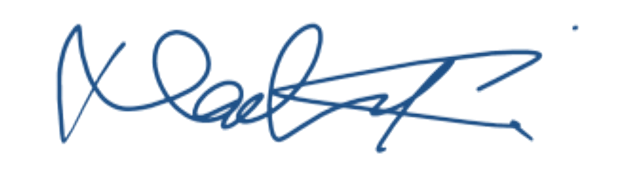
Nadine Tacorian Arzerounian
Co-Chief Executive Officer, Tacori